
Carry-Hole Boards: Agree the Opening Reference
For a carry-hole board, ask the supplier to identify the outer board outline, the opening outline and the opening’s position on one referenced drawing. Keep the selected sample linked to that record. The words oval or carry hole do not supply dimensional tolerances or prove grip or hanging performance. Confirm the requested geometry and any intended-use requirements separately.
Choose the correct board reference
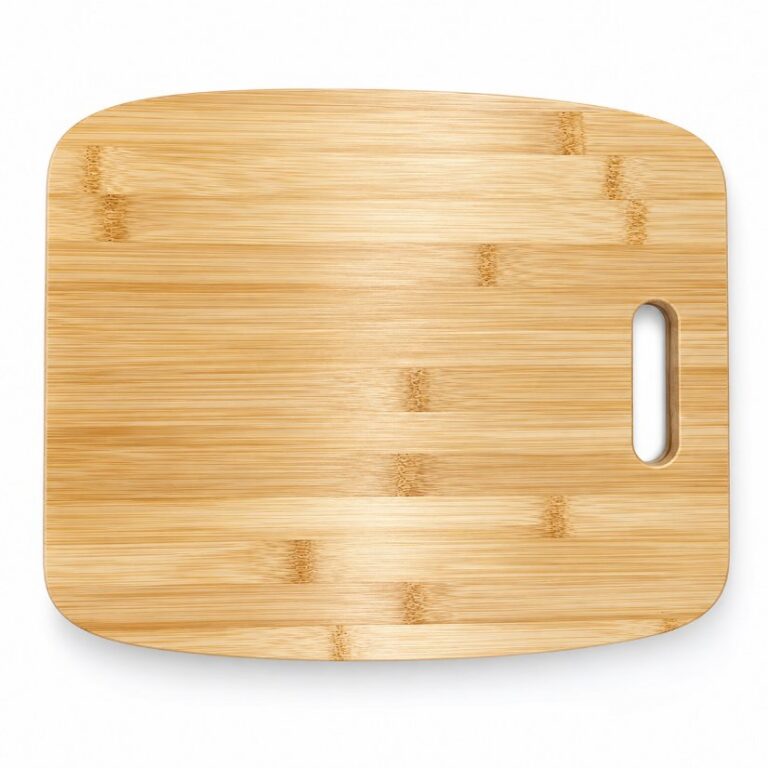
Shengyue Home lists a Multifunctional Bamboo Cutting Board with Carry Hole. The product description refers to an oval opening, and the catalogue view shows an opening near one end of the board. Use that exact product reference when asking for a sample or drawing. A different board described only as having a hanging hole may require a separate design discussion.
Identify which version the supplier is proposing before approving the opening. If a different outline, size or opening arrangement is offered, ask for a revised reference. Keep the supplier’s bamboo terminology as a product description; the visible appearance does not independently establish material composition, surface treatment or suitability for the buyer’s intended use.
Distinguish the opening from the outside outline
The board’s overall dimensions and the opening dimensions answer different questions. Ask the supplier to show them on separate, clearly named parts of the drawing. If an edge or a reference face is used to describe the opening’s position, identify it consistently. Do not estimate a dimension by comparing the hole with the overall photograph.
A description such as oval helps identify an appearance, but it may not be precise enough for a drawing approval. Ask the supplier to define the actual proposed outline if its geometry matters to the purchase. The buyer should not impose a mathematical shape or an assumed radius on a catalogue term without a confirmed design response.
Use a geometry record with named boundaries
An approval table can prevent the team from checking the wrong feature. It should describe which part of the proposed board is being discussed, what the supplier needs to confirm and which reference will be retained. Leave an unanswered measurement open instead of filling it with an estimate from the product image.
Feature | Question to confirm | Reference to retain
Outer board outline | Which overall version is offered? | Selected product and drawing identifiers
Opening outline | What is the proposed opening geometry? | Supplier-defined detail view
Opening position | Which edge or face establishes its location? | Marked orientation and reference boundary
Relevant thickness detail | Which stated section is being measured? | Matching supplier drawing when required
Sample identity | Which approved drawing does it represent? | Named sample and revision record
State a proposed display requirement separately
If the buyer intends to use the opening with a display or hanging arrangement, describe that proposal as a separate requirement and ask the supplier for an order-specific response. Do not assume a particular hook is included, or that a pictured opening establishes a confirmed hanging arrangement. The board reference and the related display proposal should remain distinguishable.
Likewise, the carry-hole description should not be converted into a grip-strength or load claim. Ask the supplier which information is available for the intended project and keep any supporting evaluation separate from the visual approval. A clear drawing can settle which opening is selected without pretending that its appearance proves performance.
Compare samples against the same orientation
Use a consistent orientation when photographing or annotating a proposed sample. Identify the reference end of the board and show the opening in relation to it. This helps the supplier understand whether a reported difference concerns the opening’s shape, its location or the outside outline rather than the way the sample was photographed.
When a sample seems different, record the sample identifier and mark the visible difference against the supplier drawing. Do not attribute it to an unconfirmed material or production change. Ask the supplier for a response to the specific feature. If the supplier proposes a revised drawing, retain it as a proposal until the buyer approves the identified change.
Keep geometry approval distinct from other specifications
The product page contains use-related descriptions, but approval of the hole geometry is narrower than approval of every material, finish or use claim. If the order has requirements for composition, surface treatment or a particular application, request the relevant supplier documentation separately. Do not add an unsupported safety or care statement to a retail listing because the opening sample was accepted.
The final purchasing record should combine the selected board reference with the approved opening drawing and sample identifier. Ask how the supplier will identify the version in its documents. For a repeat order, state whether the retained geometry is to remain the reference or whether a new proposal needs review. This gives both parties a clear basis for the discussion without relying on a generic carry-hole label.
• Identify the board and opening as separate drawing features.
• Use a named orientation and reference boundary.
• Keep display requirements and performance questions separate.
• Retain the approved sample and drawing revision together.
Frequently asked questions
Does oval carry hole define a precise opening geometry?
Not by itself. Use the phrase to identify the catalogue discussion, then ask the supplier to define the proposed outline on a drawing when geometry matters to the order.
Can the hole dimensions be estimated from the photograph?
Do not use image scaling as a confirmed specification. Request the relevant dimensions, units and reference boundaries from the supplier and keep missing information unresolved.
Does the opening establish a hanging or load rating?
No. Any proposed display arrangement or performance requirement needs its own supplier response and appropriate supporting information. The visual opening reference does not establish those results.
What should be retained after sample approval?
Keep the selected board reference, opening detail, orientation, supplier drawing revision and sample identifier together. Request a revised approval if the offered version changes.
Product and contact references
Carry-hole board product reference: https://shengyuehome.com/product/product-7/
Related cutting-board catalogue: https://shengyuehome.com/products/?product_filter=cutting-boards
Contact Shengyue Home: https://shengyuehome.com/contact/
Shengyue Home blog: https://shengyuehome.com/blog/