
Rack RFQs: Separate Product and Pack Measurements
For a countertop rack RFQ, keep product measurements and packing measurements in separate fields. Ask which state and named axes the supplier’s size entry describes, what its weight entry includes, and how the proposed shipping unit is packed. A product-page dimension is not automatically a carton dimension. Compare quotations only after the item, unit and measurement basis are clear.
Read the catalogue entries as supplier-listed product data
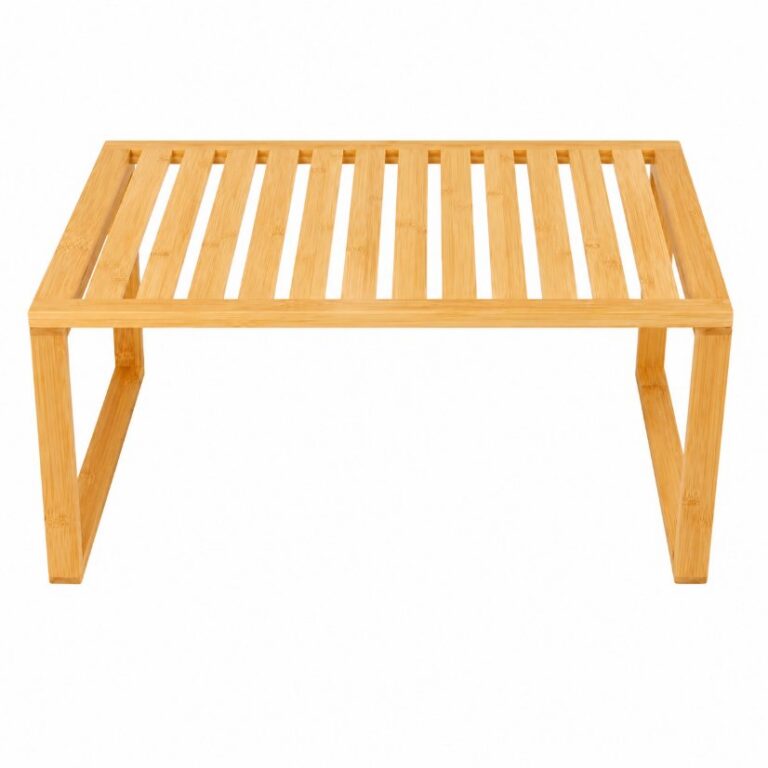
Shengyue Home’s product page for its kitchen storage rack lists a size of 40 × 25 × 18 cm and a weight entry of 550 g. These are supplier-listed entries for the product reference. They should not be described as independently measured values or copied into a shipping quotation as confirmed carton dimensions and shipping weight.
Ask the supplier to identify what those entries describe for the version being offered. The buyer needs a named dimension order and a clear statement of the item state. Keep the product link with the request, especially if a sample or later quotation carries a different description. A short size line cannot answer every question about assembly, packing or the measurement basis.
Name the axes and the measured state
Request a supplier-marked view showing which edges correspond to the listed dimensions. Do not decide the order from the viewing angle of the photograph. Ask whether the description concerns the complete offered rack in its supplied state, a proposed assembled presentation or another identified condition. If a drawing is provided, retain its revision with the response.
A buyer can explain the intended shelf or countertop location as a separate requirement. That location should not become a reason to adjust the supplier’s figures without confirmation. Ask for a response against the actual reference and the proposed arrangement, with unresolved clearances or dimensions left visible rather than filled in by estimation.
Use separate lines for item and package data
The comparison table should distinguish an item description from a proposed packed unit. This matters when commercial teams exchange figures without identifying what is being measured or counted. Ask for missing information explicitly instead of treating a blank package field as a copy of the product-page entry.
Data field | Supplier confirmation needed | Do not assume
Product dimensions | Named axes and measured item state | That the catalogue order is self-explanatory
Item-weight entry | Which item or components were included | That it is the packed shipping weight
Quoted sales unit | What one commercial unit contains | That every quotation uses the same unit
Proposed packed unit | Packing state and included quantities | That the product view shows the packing arrangement
Package dimensions and mass | Order-specific packing data | That these equal the product entries
Ask how the proposed supply state affects the pack
The catalogue photograph shows the rack as a complete-looking object. Ask whether the offered order is supplied in that condition or in another agreed arrangement. If components or fittings are supplied separately, request their inclusion schedule and proposed packing description. These are questions about the actual offer, not a statement that a particular flat-pack or assembly service is available.
If several units are proposed within one shipping package, ask the supplier to identify that package as a separate data line. Keep the quantity, arrangement and package description together. A calculation based only on multiplying the product dimensions or the listed item weight does not establish the real packed unit.
Keep a quotation comparison on one unit basis
Before comparing offers, confirm whether each commercial total concerns an individual rack, an identified sales pack or a shipping unit containing several items. Record the supplier’s definition beside the figures. If the unit basis changes, update the comparison rather than retaining an attractive total whose scope is no longer the same.
The same care applies when packing data is revised. Ask whether a revised carton proposal changes the quantities, item state or included components. Leave logistics calculations provisional until the supplier supplies the appropriate order-specific data. The purpose is to make the comparison interpretable, without promising a particular packing efficiency, transport cost or delivery result.
Approve a data sheet that identifies each figure
Retain the product reference, marked measurement view, confirmed sales-unit description and proposed packing data together. Ask the supplier to state the document revision or another agreed identifier. Purchasing and logistics should be able to tell which figures describe the product and which describe the pack without interpreting an earlier message thread.
If a sample is available, ask which reference and state it represents. A sample can help resolve the discussion, but its existence does not independently verify every catalogue entry or establish a load rating. Any required material, performance or intended-use information needs its own supplier response rather than being inferred from the slatted product appearance.
• Keep supplier-listed product data on its own line.
• Request named axes and an identified measurement state.
• Confirm the quotation unit before comparing totals.
• Obtain order-specific package data separately.
Frequently asked questions
Can the listed size be used as the carton size?
No. Ask the supplier for the proposed packed-unit dimensions. The product-page entry and the packing arrangement describe different questions and need separate records.
Does the listed weight establish the shipping weight?
Not without a confirmed basis. Ask what the supplier’s item-weight entry includes and request the weight information for the actual proposed shipping package separately.
What should be done when the dimension order is unclear?
Request a marked drawing or view that names the axes. Retain it with the selected product reference instead of assigning width, depth and height from the photograph.
What belongs in the approved quotation-data record?
Keep the selected version, measurement state, named axes, sales-unit definition and packing-data revision together. Mark missing figures as unresolved rather than converting product data into shipping assumptions.
Product and contact references
Countertop rack product reference: https://shengyuehome.com/product/product-9/
Related storage-rack catalogue: https://shengyuehome.com/products/?product_filter=storage-racks-shelves
Contact Shengyue Home: https://shengyuehome.com/contact/
Shengyue Home blog: https://shengyuehome.com/blog/