
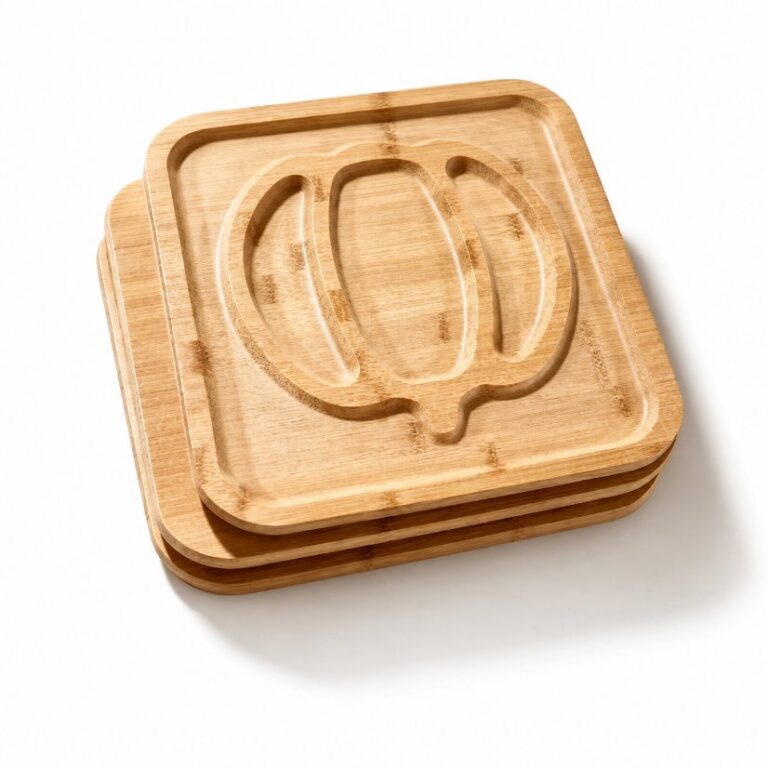
Pumpkin Tray Samples: Approve the Groove Layout
For a pumpkin-pattern tray sample, identify the selected tray version and ask the supplier to mark the groove layout on a matching top view. Separate the outside outline, carved areas and any intended compartments. Retain the drawing and sample identifiers together. A stacked catalogue photograph does not establish the ordered set count, dimensions or a confirmed functional use for every carved area.
Identify one tray version before reviewing the pattern
Shengyue Home lists a Multifunctional Bamboo Tray, Pumpkin-Shape Grooved Tray. Its product page describes a carved pumpkin-shaped design, while the catalogue image shows several trays stacked together. Use the product link and an identified view to tell the supplier which version you want to discuss. Do not convert the number of visible trays into an assumed package quantity.
If the supplier proposes more than one size or design version, ask it to identify each proposal separately. A similar pumpkin outline does not establish that every version has the same groove arrangement. Keep the requested pattern reference distinct from the supplier’s quotation unit, so a design approval cannot accidentally become approval of a mixed assortment or a different supplied quantity.
Give the carved areas their own reference
Ask the supplier to provide a clear top view that identifies the outside edge and the carved pattern. Mark the particular areas the buyer wants to discuss, then ask the supplier to explain their intended description for the offered version. A decorative groove and a proposed compartment are not automatically the same commercial or functional requirement.
If separate sections are important to the purchase, request the relevant drawing and an explanation of their arrangement. Do not estimate groove depth or usable space from shadows in a photograph. The buyer can describe its intended use as a requirement, but the supplier needs to confirm which offered version and supporting information address that request.
Compare the reference types before choosing an approval
Different references help resolve different questions. A catalogue image can identify the design discussion, while a supplier-marked drawing can explain the proposed layout. An identified sample can connect that information to the item under review. Keep these roles clear rather than treating one attractive image as a complete specification.
Reference | Question it addresses | Information still to confirm
Catalogue view | Which design is being discussed? | Selected version and quoted unit
Marked top view | Which areas belong to the requested layout? | Meaning of each identified area
Dimensioned supplier drawing | Which boundaries are being measured? | Agreed dimensions and their basis
Identified sample | Does this item represent the selected layout? | Any difference from the approved drawing
Order description | Which approved version is purchased? | Quantity and packaging scope
Separate the outside outline from the groove arrangement
Ask the supplier to distinguish the tray’s overall outline from the internal carved boundaries. If the buying team requests a change to one area, explain which part of the reference it means. A change to an outside corner should not be confused with a change to the pumpkin pattern or to an internal section.
Use the same orientation on the annotated view and the supplier response. If the reference is rotated, mark a consistent front or identifying edge for the discussion. This helps people compare the same part of the design without relying on informal descriptions such as the left groove in an image whose orientation has changed.
Keep material and use questions outside visual approval
The product page uses bamboo terminology, but the appearance of a groove sample does not independently verify composition, surface treatment or suitability for a particular use. If those matters are purchasing requirements, ask for the corresponding supplier description and appropriate supporting information. Keep an unresolved requirement visible alongside the design discussion.
Do not turn a catalogue serving or organising description into a food-contact or performance guarantee. The buyer should state the intended project and ask the supplier what information is available for that proposed use. Design approval can settle which pattern is selected without pretending that a photograph has answered every material, handling or use-related question.
Freeze the pattern record with the quotation version
Once the layout discussion is resolved, retain the selected product reference, marked drawing and sample identifier together. Ask the supplier to describe any difference between the sample and the quoted version. If a revised design is proposed, keep it separate until the buyer explicitly approves the change.
Carry the approved design reference into the purchase description and ask how the supplier proposes to identify that version in its commercial documents. Confirm the number of trays in the quoted unit and the packaging scope separately. A clear order record lets purchasing and receiving distinguish an approved pattern from a display stack, an alternative version or an unanswered design proposal.
• Name the selected tray version and the quoted unit separately.
• Ask for a marked view of the carved layout.
• Distinguish the outside outline from internal boundaries.
• Retain the drawing, sample and quotation references together.
Frequently asked questions
Does the stack in the photograph establish a multi-piece set?
No. Ask the supplier to define the quotation unit and its piece count. The photograph can identify the design but should not replace a written supply description.
Can groove dimensions be measured from the image?
Do not infer them from a photograph. Request a supplier drawing with a stated measurement basis if the outside outline or carved areas need dimensional approval.
Does approval of the pumpkin pattern establish a particular use?
Pattern approval identifies the selected layout. Material, surface-treatment and intended-use requirements need separate supplier information and should remain open until the relevant questions are resolved.
What should happen when a sample differs from the drawing?
Identify the sample and drawing versions, mark the difference and request a supplier response. Keep a revised proposal separate until the buyer approves the identified change.
Product and contact references
Pumpkin-groove tray product reference: https://shengyuehome.com/product/product-6/
Related serving-tray catalogue: https://shengyuehome.com/products/?product_filter=serving-trays
Contact Shengyue Home: https://shengyuehome.com/contact/
Shengyue Home blog: https://shengyuehome.com/blog/